Ronda Beaman Makes a Case for Letter Writing as a Form of Truth-Telling in New Prompt Collection
In a new piece on the value of pen-and-paper correspondence, Ronda Beaman argues that letters survive the habits of instant digital communication and force writers to say what they really mean. Her new book, A Life in Letters: Notes and Prompts for a Return to Pen and Paper, is available from Amplify Publishing.
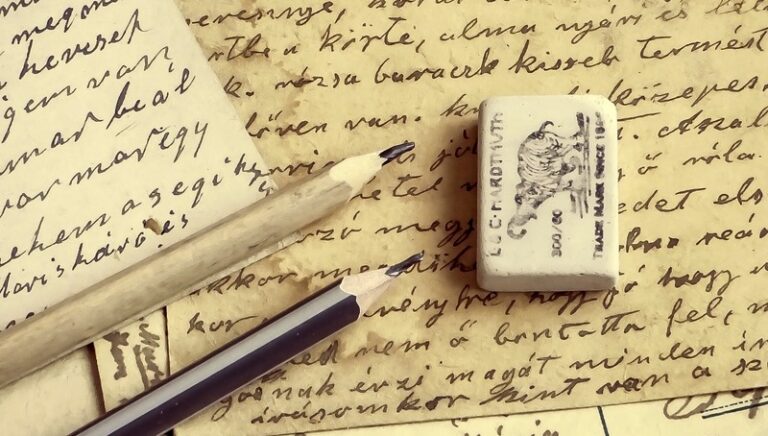
Ronda Beaman is urging readers to return to letter writing, not as a nostalgic hobby, but as a way to recover honesty on the page. In a reflection tied to her new book, she argues that people often avoid writing not because they are too busy or have nothing to say, but because a letter can be kept, reread, and answered. Unlike a disappearing text or a deleted email, a handwritten letter carries the unsettling sense that it may endure.
Letters as permanent speech
That permanence is central to Beaman’s view of why letters still matter. She describes herself less as a conventional writer than as a “letter doula,” someone who helps bring difficult truths, delayed gratitude, overdue apologies, impossible love, and unresolved grief into the world. In her telling, letter writing demands more than style or polish: it asks the writer to decide what deserves to outlive the moment in which it is written.
Beaman connects that idea to a broader culture of performance writing. She says modern communication encourages people to curate themselves constantly, producing vulnerability that is edited, filtered, captioned, and optimized. The result, she suggests, is a world in which many people can sound emotionally open while revealing very little. A letter, especially one written by hand, resists that tendency because it cannot hide behind branding or endless revision forever. At some point, it has to answer one hard question: what do you actually mean?
Writing to one person at a time
One of Beaman’s main prompts asks writers to choose a single person rather than “the world” as their audience. She encourages them to think of one face that changes when they enter the room, then finish a private sentence: “What I have never fully told you is…” The point is not elegance or literary ambition. It is sincerity. She argues that direct, emotionally simple lines such as “I miss you,” “I forgive you,” “I was wrong,” and “Thank you for loving me when I was difficult to love” can carry more force than elaborate rhetoric.
That emphasis on directness comes from Beaman’s own experience of writing letters to a range of people: some she adored, some who hurt her, and some who would never read what she wrote. She treats that practice as proof that writing is not always about communication in the narrow sense. Sometimes it is about clarification or excavation—figuring out what one actually feels or believes. Even an unsent letter, she argues, creates a sense of relationship because it imagines a witness on the other side of the page.
Starting before the feeling is settled
Another prompt in the book asks writers to begin before they understand why something matters. Beaman advises them to write the sentence, “I do not entirely understand why this matters to me, but…” and keep going for seven uninterrupted minutes without deleting, correcting, or rereading. She argues that many people stop precisely when they are on the verge of saying something real. The instruction is designed to push them past self-censorship and into the place where truth tends to appear.
Beaman also challenges the idea that a writer needs emotional closure before beginning. In her view, some of the most powerful work emerges in the middle of confusion, not after it has been neatly resolved. Uncertainty, she says, sounds human, and readers tend to trust humanity more than certainty. The method is less about perfecting language than about staying with a thought long enough for it to become clear.
The unwritten letter
The final prompt in her reflection points to the letter that already exists in the writer’s life, even if it has not yet been sent. Beaman imagines the letter rehearsed privately in moments of solitude—during a drive, in the middle of the night, at a funeral, or at an airport gate. Her instruction is simple: write it now, without waiting to feel eloquent or healed.
For Beaman, the deeper purpose of letter writing is not just correspondence but preservation. Letters train writers to notice what deserves articulation before it is too late, and to rescue what might otherwise remain unspoken. She presents that act as both personal and literary: a way to say the thing meant, and perhaps, years later, to leave someone else feeling less alone.
A Life in Letters: Notes and Prompts for a Return to Pen and Paper by Ronda Beaman is available from Amplify Publishing.