Montserrat Roig’s Goodbye, Ramona Recasts Spanish Civil War History Through Three Generations of Women
A new discussion of Montserrat Roig’s 1972 Catalan novel highlights how the book uses the Spanish Civil War and Franco-era repression as the backdrop for an intimate story of women’s lives, loves, and limits. The novel, now appearing in English in translation by Megan Berkobien and María Cristina Hall, is being read as both a literary landmark and an antifascist work with renewed contemporary resonance.
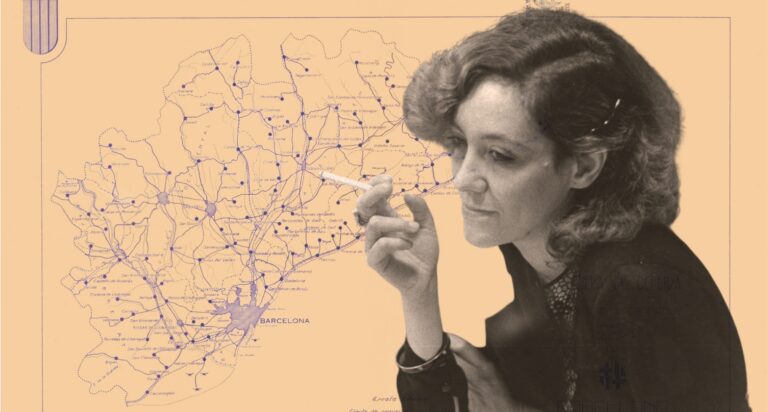
Montserrat Roig’s Goodbye, Ramona begins in the middle of the Spanish Civil War and ends there as well, but the novel’s real subject is not battlefield strategy or political factionalism. Instead, the 1972 Catalan classic centers on Ramona Ventura as she moves through bombed streets and even a morgue, searching for her husband while Barcelona comes under attack.
The novel, Roig’s first, announced a major new voice in Catalan literature when she published it in her mid-twenties. Born under the Franco dictatorship, Roig was already known as a feminist and antifascist activist, and her fiction reflects that political formation without turning into a straightforward historical chronicle. Goodbye, Ramona treats one of the most studied conflicts in modern European history as a human crisis seen from inside women’s daily lives.
Roig structures the book around three related narratives, each following a different Ramona across three generations of women in Barcelona. The oldest thread opens in 1894 with Ramona Jover’s diary, just before an arranged marriage to a man she barely knows. Her life has material comfort, but little real freedom. A later thread follows Ramona Ventura through the violence and deprivation of the civil war. The youngest, Ramona Claret, is a university student in the late 1960s, still living with her mother and grandmother while becoming involved in a dangerous student resistance against the far-right state.
That structure lets Roig show how political upheaval shapes private life over decades. The women in the novel are defined less by public ideology than by what they are allowed to want, whom they are expected to love, and how they survive men who make decisions on their behalf, whether those men are husbands, fathers, or government leaders. The youngest Ramona’s political awakening is also a personal disappointment: she falls for a student activist whose own professed politics sit uneasily beside his treatment of women.
The novel’s historical backdrop is inseparable from its present-day force. The Spanish Civil War began in 1936 with a far-right military coup against an elected government, led by nationalist forces unwilling to accept the result. The war caused catastrophic losses, followed by a wave of executions and, in 1939, the consolidation of Franco’s dictatorship, which lasted until 1975. In that period, public use of Catalan and other non-Castilian languages was suppressed, making Roig’s decision to write in Catalan itself a political act.
The current English translation by Megan Berkobien and María Cristina Hall brings that history into a new linguistic register while preserving the novel’s movement between domestic life and national catastrophe. Goodbye, Ramona presents resistance in several forms: resignation, endurance, and unfinished rebellion. Read now, it also serves as a reminder that authoritarian politics can invade ordinary life through family, language, and the most intimate arrangements of power.