Helene Giannecchini’s ‘An Army of Lovers Cannot Fail’ Appears in English in an Excerpt on Desire, Care, and Political Attention
An English-language excerpt from Helene Giannecchini’s An Army of Lovers Cannot Fail, translated by Anna Moschovakis, follows a relationship that begins online and deepens through intimacy, illness, and mutual care. The passage turns a personal encounter into a study of age difference, emotional opacity, and the way political intelligence and tenderness can shape a bond.
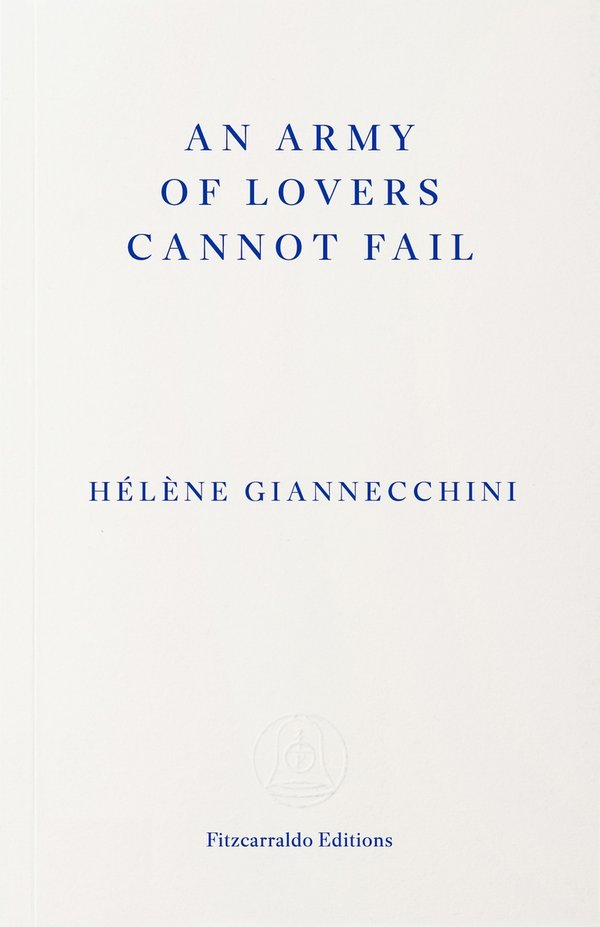
Helene Giannecchini’s An Army of Lovers Cannot Fail has appeared in English in an excerpt translated by Anna Moschovakis, offering readers a close look at a relationship that begins with a message online and grows into something far more consuming. The passage, titled “Our Inheritance Was Left to Us by No Testament,” traces attraction, hesitation, sex, care, and illness through the voice of a younger narrator drawn to a woman named Myriam.
The excerpt begins with the narrator, age 24, initiating contact with Myriam, who is 40. Their early exchanges are marked by energy and quick wit, and the narrator senses an anger beneath Myriam’s composure. What starts as regular morning messaging gradually extends into a constant presence in the narrator’s day, until attention to the phone becomes difficult to separate from ordinary life. The relationship first crosses into physical space in a Greek restaurant in Paris’s 10th arrondissement, where the pair meet after their online connection has already become intensely charged.
From there, the text moves through the unstable mix of attraction and uncertainty that follows first dates and first sexual encounters. The narrator describes being both seduced and wary, aware of Myriam’s steeliness even as the connection deepens. Their second meeting, in a café, reveals a different register of intimacy: Myriam arrives by bicycle, is at ease, and helps the narrator through the embarrassment and confusion that follow their night together. The age gap remains visible in passing references and shared culture, but it does not end the relationship; instead, it becomes part of the texture of their exchanges.
The excerpt also pays close attention to Myriam’s life beyond romance. Her apartment is nearly bare, with books stacked along the walls and clothes stored in boxes under the bed, giving the space a stark, ascetic quality. She works, reads the paper aloud, and offers analyses shaped by a political way of seeing the world. At times she goes out dressed carefully, while the narrator prefers the quiet of their own apartment and does not ask where she goes. Opacity, the narrator suggests, is part of desire.
That balance of distance and closeness becomes more pronounced when the narrator develops shingles a few months into the relationship. Myriam moves the narrator into her bedroom and takes care of them through pain, vertigo, and exhaustion. The care is described as unusually exact and unsentimental: she tends without making the attention feel like a debt. In one scene, she reads aloud from Bernard-Marie Koltès’ In the Solitude of Cotton Fields while the narrator lies debilitated in bed, listening to the music of her voice and to a line that links memory, frankness, and nakedness.
The passage’s emotional force comes from the way it connects erotic intensity to forms of solidarity that are quieter and harder to name. The narrator does not simply fall in love; they are altered by being cared for in a way that feels disciplined, direct, and free of theatrical reassurance. That combination of sex, restraint, and practical support gives the excerpt its shape and its tension.
By focusing on one relationship, the translation opens onto larger questions about attachment, power, age, and political consciousness. Myriam is not presented as a romantic ideal but as someone with edges, routines, convictions, and histories of love. The narrator’s response is equally complicated: fascination, fear, gratitude, and longing all coexist. In that sense, the excerpt frames Giannecchini’s book as a work interested not only in intimacy, but in the forms of inheritance that arrive through care, conflict, and the difficult work of staying present to another person.